


Shopify Development Agency UK

Shopify and Shopify Plus development for brands across the UK, from store builds and migrations to integrations and governance that keeps your store reliable.

View Our Work

Shopify Development Agency UK
Selected Shopify Work

Shopify Experience Built on Delivered Work

Looking for a Shopify agency in the UK that can show what it has delivered? Influxive works with UK retailers, B2B organisations and growing brands on new stores, redesigns, migrations and wholesale portals. As a Shopify agency for small and large businesses, we bring wider engineering experience to every project. For us, bespoke Shopify website development goes beyond the storefront: we connect Shopify with the inventory, finance and customer systems that keep your business running.
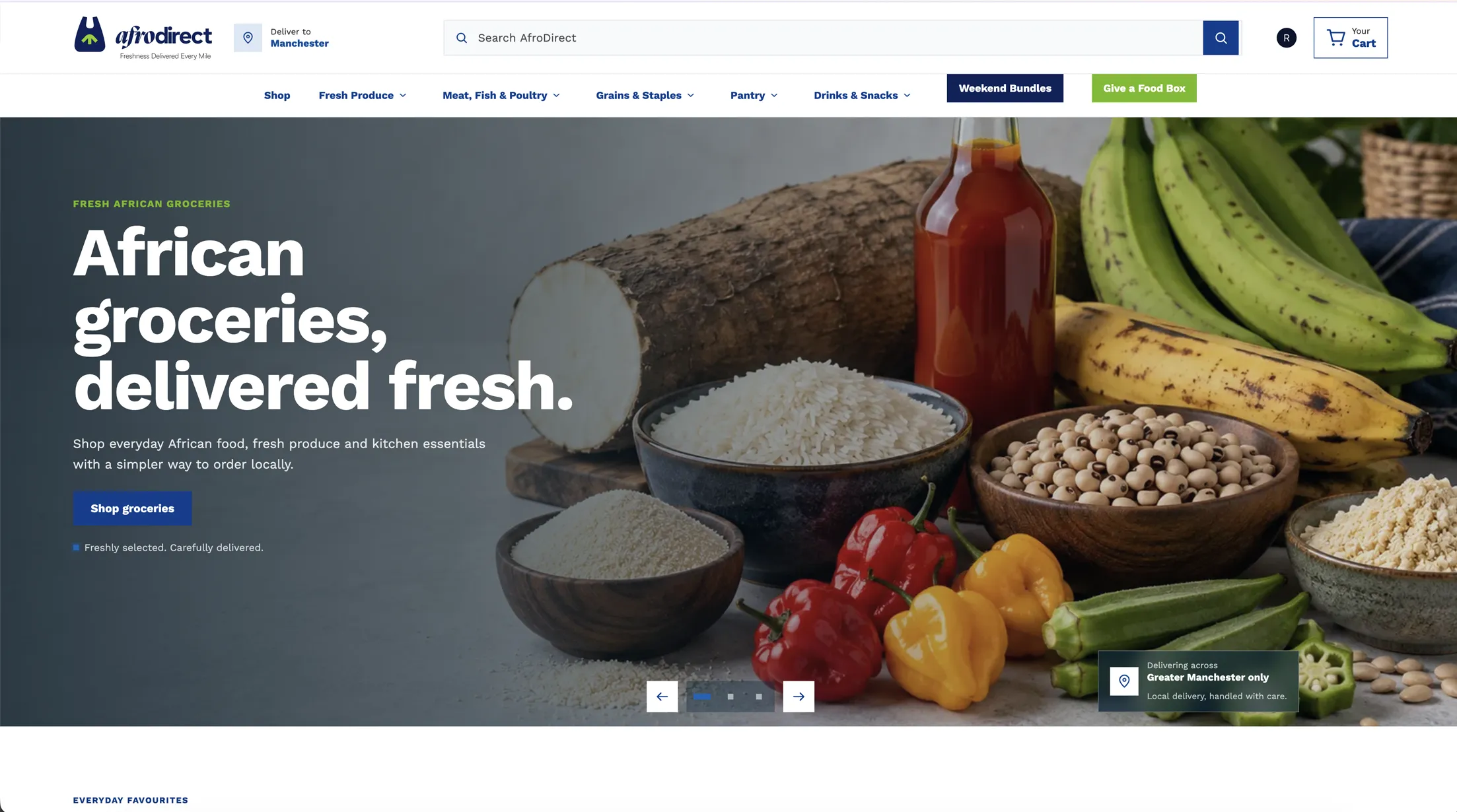
Online Grocery, Food and Beverage Shopify Ecommerce Platform
  • 20
  • 10
  • 10+
  • Projects Delivered
  • Markets Served
  • Years on Shopify
View Our Shopify Portfolio
Shopify agency for UK businesses

Who We Support Across the UK

As a Shopify agency for UK businesses, we work with emerging direct-to-consumer brands, established high-street retailers and international companies entering the UK market. Our work as a Shopify agency for ecommerce brands includes subscription services, stores needing modernisation and businesses moving from Magento, WooCommerce or BigCommerce. For retailers with multiple locations, we connect online and in-store stock so customers have accurate availability information. We work with retailers, B2B organisations and ecommerce brands across the UK, including London, Manchester, Birmingham, Leeds, Glasgow, Edinburgh, Bristol and Liverpool.
Emerging DTC brands

Emerging DTC brands

A first serious storefront that can absorb growth without a rebuild in year two.

Established retailers

Established retailers

Online and in-store selling brought onto one view of stock, orders and customers.

B2B manufacturers and distributors

B2B manufacturers and distributors

Account pricing, payment terms and reordering for trade buyers.

Multi-location businesses

Multi-location businesses

Inventory, pickup and fulfilment across stores and warehouses.

Subscription businesses

Subscription businesses

Recurring billing, customer self-service and churn visibility.

International brands entering the UK

International brands entering the UK

UK pricing, VAT, payment methods and delivery set up correctly from day one.

Shopify Plus technical support

Shopify Problems Limiting Commerce Growth

Growth becomes harder when customers struggle to buy and staff spend too much time correcting orders, checking stock or resolving website issues. These are common reasons UK businesses seek Shopify performance optimisation and ongoing support, particularly when their existing store no longer meets the needs of customers or their own team.

Mobile Visitors Who Do Not Convert

Small buttons, awkward navigation and unclear product information make shopping difficult on phones.

Slow Themes and Too Many Apps

Overlapping apps, unused scripts and repeated theme edits can slow the store and increase running costs.

Disconnected Business Systems

Staff manually transfer orders, stock figures and customer details between Shopify and other business systems.

Product Catalogues That Are Difficult to Shop

Customers struggle to find the right product when filters, variants, bundles or technical specifications are poorly organised.

Wholesale Ordering That Still Depends on Email

Trade customers rely on phone calls, emails and spreadsheets when they cannot access agreed prices, payment terms or quick repeat ordering online.

Migrations That Leave Problems Behind

Missing records, incorrect product data and broken redirects can disrupt trading after a platform move.

Analytics That Are Difficult to Trust

Shopify, GA4 and advertising platforms report different figures, but the reasons are unclear.

International Operations That Rely on Workarounds

Managing currencies, regional catalogues and tax settings becomes difficult when processes depend on spreadsheets and manual edits.

Updates That Disrupt Trading

Theme and app changes reach the live store without adequate testing or a recovery plan.
Our Development Capabilities

Shopify Development Services for UK Businesses

From a first Shopify store to a complex Shopify Plus platform, our services cover every layer of a Shopify platform: storefront design and theme development, B2B and multi-market selling, custom apps, ERP and CRM integration, platform migration, performance optimisation and ongoing support. Each service can be delivered on its own or combined into one programme, managed by a single accountable team.
Layer 1

Experience

What customers see and use

Layer 3

Systems

How Shopify connects to the business

Layer 4

Operations

Keeping it fast and reliable

Across England, Scotland, Wales and Northern Ireland

Supporting Shopify Businesses Across UK Markets

We work remotely with organisations throughout the UK. What we bring to each region is an understanding of the commerce models that shape it.
Region 01 of 10

London and South East

The UK’s densest commerce market, with high customer expectations, international audiences and fierce competition for attention.
LondonLondon

London

London brands in fashion, beauty and lifestyle sell through their own sites, flagship stores, wholesale and marketplaces at once, often to international customers. We build Shopify platforms that hold one view of stock across channels, cope with launch and sale-day traffic, and support selling into the EU and beyond.
  • Fashion and beauty
  • Omnichannel
  • International selling
Also supporting
  • Reading
  • Oxford
  • Cambridge
  • Brighton
  • Southampton
All locations we support
  • London
  • Reading
  • Oxford
  • Cambridge
  • Brighton
  • Southampton
  • Manchester
  • Liverpool
  • Birmingham
  • Nottingham
  • Leicester
  • Coventry
  • Leeds
  • Sheffield
  • Newcastle
  • Bristol
  • Truro
  • Glasgow
  • Edinburgh
  • Cardiff
  • Swansea
  • Belfast
  • Derry / Londonderry
  • Lisburn
  • Bermuda
  • Hamilton
  • Gibraltar
  • Cayman Islands
  • Isle of Man
  • Jersey
  • Guernsey
Shopify Checkout Integration

Payments, Tax and Checkout for UK Commerce

UK shoppers expect to pay their way, quickly and securely. Alongside debit and credit cards, that means Apple Pay, Google Pay, Shop Pay and PayPal, and in many categories a buy-now-pay-later option such as Klarna or Clearpay. We configure Shopify Payments or your preferred gateway and tune fraud rules to keep chargebacks under control. VAT needs equal care. Consumer prices must be shown including VAT, while trade buyers usually expect VAT-exclusive pricing and valid VAT numbers on their invoices. Selling into the EU after Brexit brings further decisions, from IOSS registration for lower-value parcels to showing duties clearly at checkout, and Northern Ireland follows its own rules for goods. We configure Shopify Tax, Shopify Markets and invoicing so every customer sees the correct price before paying.
This is implementation guidance, not tax or legal advice. Please confirm your VAT and consumer obligations with a qualified UK accountant or adviser.
  • Debit and credit cards
  • Digital wallets
  • Klarna and Clearpay
  • Shopify Payments
  • Strong Customer Authentication
  • Fraud and chargebacks
  • VAT-inclusive pricing
  • EU VAT and IOSS
  • B2B VAT and invoicing
  • Accessible checkout
Integrations and commerce architecture

Connecting Shopify With Your Business Systems

Shopify is rarely the only system that matters. For most UK businesses, it exchanges data every day with accounting, stock, warehouse, customer service and marketing platforms. Those connections are where most operational problems begin: orders that never reach the warehouse, stock that oversells, or invoices that do not match.

Shopify

Orders · Products · Customers · Stock · Payments

ERP ⇄ Shopify

Near real time

Shopify sends

  • Orders
  • New customers
  • Payments

Shopify receives

  • Stock levels
  • Price lists
  • Product data
Source of truth: ERP owns prices and stock
Common UK platforms: Microsoft Dynamics 365, NetSuite, SAP Business One

How we build every integration

Integrations do fail. We plan for it, so a sync that stops at 2am during a sale is caught and recovered, not discovered by customers the next morning.
01

Integration mapping

Every data flow documented: what moves, in which direction and how often.
02

Data ownership

One system agreed as the source of truth for prices, stock, customers and VAT.
03

Failure handling

Retry logic and a queue for unprocessed records, so nothing is silently lost.
04

Monitoring

Alerts when a sync slows or stops, day or night, including peak trading.
05

Documentation

Runbooks your own team can follow, with no dependence on one developer.
How we deliver

From Commerce Assessment to Controlled Launch

Twelve stages in four phases, each ending in something you can read, review or approve. Nothing moves forward on assumption, and no technology is chosen because it is fashionable.
01Stages 1–3

Assess

Understand the business, the market and the current platform before proposing anything.
01

Business and platform discovery

Goals, constraints and success measures in a written brief.
02

UK customer and market assessment

Buyer expectations, VAT and delivery norms, competitor benchmarks.
03

Technical and integration audit

Theme, app and data-flow findings from the Readiness Framework.
02Stages 4–5

Decide

Choose the right architecture and design, with the reasoning and running costs shown.
04Decision point

Architecture recommendation

Options with costs. You approve scope and plan.
05Sign-off

UX and storefront planning

Wireframes and designs signed off before any code.
Need, not fashion

What we will not automatically recommend

Every recommendation comes with its reasoning and its cost of ownership.
  • Shopify Plus when standard Shopify is sufficient
  • Headless architecture without a commercial reason
  • A custom application when native functionality works
  • Numerous apps that raise cost and platform risk
  • A full migration when the existing platform can be improved
  • Extensive customisation that becomes hard to maintain

If a smaller engagement solves the problem, that is the one we propose.

03Stages 6–9

Build

Develop, migrate and test in a staging store, demonstrated as we go.
06

Development and integration

Built in a staging store, demonstrated every sprint.
07

Product, customer and order migration

Trial runs with reconciliation reports.
08

Performance, accessibility and quality

Test results against agreed thresholds.
09

Analytics and conversion measurement

Tracking verified against real test orders.
04Stages 10–12

Launch and govern

Go live under control, then keep the platform reliable.
10

Controlled launch

Go/no-go checklist, redirect map and rollback plan.
11

Post-launch monitoring

Close watch on orders, errors and speed.
12

Ongoing platform governance

Release calendar, access reviews and a planned backlog.
Delivery model and governance

How We Work With UK Teams, Before and After Launch

India is four and a half to five and a half hours ahead of the UK, so your morning overlaps with our working day and progress continues while you are offline. The team that builds your store is the team that keeps it reliable afterwards.
During your project

Remote, but never out of reach

Weekly demonstration

Working software on a staging store, not slides.

Written status

Progress, risks and decisions needed, in one shared channel.

Issue escalation

A defined path beyond the delivery lead for urgent matters.

Quality assurance

Device, browser, accessibility and order-flow testing.

Documentation

Architecture, integrations and admin guides handed over.

Launch support

Go-live timed for your quietest trading hours, with our team on watch.
After launch

Keeping Shopify reliable

Most stores degrade slowly: an app left over from one campaign, a former contractor with admin access, a theme edit shipped on a Friday without review. Governance stops this.

Control

  • Approved register of apps and extensions
  • Role-based admin access, reviewed on a schedule
  • Releases through staging, review and a rollback plan

Watch

  • Performance monitoring on real visits
  • Integration health checks with alerts
  • Analytics validated against actual orders
  • Defined incident response

Improve

  • Theme and app updates applied deliberately
  • Upgrade planning ahead of Shopify changes
  • Documentation kept current
  • Prioritised backlog of improvements
What mattersWith Influxive
01

Consulting before implementation

An assessment first, so the build solves the right problem.

02

Shopify engineering depth

Custom themes, private apps, Shopify Functions and checkout extensions, with Hydrogen where justified.

03

Integration experience

Integrations built by a team with an enterprise software background.

04

Architecture that fits

A setup sized to your needs, with the reasoning and running costs shown.

500+

Digital projects delivered

25+

Countries served

15+

Years of experience

Request a Shopify Commerce Review

Frequently Asked Questions

Everything you need to know before getting started.

Average response time

24 Hours

Project consultation

Free

Enterprise-ready

✓ Trusted Delivery

The cost depends on the design, catalogue, integrations and work needed to prepare your content and data. A store using an existing theme generally costs less than a bespoke build with complex business requirements. Shopify subscriptions, paid apps and payment processing charges should be budgeted separately. Following a review of your requirements, we provide an itemised proposal covering the scope, delivery costs and ongoing expenses.

You can find developers through Shopify’s Partner Directory, recommendations and specialist agencies. Compare relevant work, communication, availability and post-launch support before deciding. If you need a UK-based developer, check where the delivery team is located. Influxive is based in India and works remotely with UK businesses, with scheduled calls during UK working hours and a named delivery lead.

Ask for examples of live stores and a clear explanation of the agency’s role in each project. Discuss testing, integrations, project management and support after launch. Confirm that your business controls the store and key accounts, and clarify ownership of commissioned code and licences for third-party themes or apps. Recommendations for Shopify Plus, headless development or paid apps should have a clear business reason.

Not necessarily. A straightforward store can launch using an existing theme and Shopify’s built-in tools. A developer becomes useful when your requirements go beyond what you can configure yourself, such as bespoke layouts, complex product options, business-system integrations or a platform migration. The decision depends on the work involved, your available time and your team’s technical experience.

As an indicative guide, allow 4–8 weeks for a theme-based store and 8–16 weeks for a bespoke design and build. Projects involving extensive data migration or complex integrations may take three to six months or longer. We confirm the schedule after reviewing the scope, content readiness and external dependencies, including any work required from your other software providers.

Yes. Most design and theme development can take place in an unpublished theme while your existing store continues trading. Before launch, we check page templates, app integrations, tracking and key buying journeys. Products, customers and orders remain in the same store, but theme settings and app embeds may need configuring again. We agree the launch steps and recovery plan before publishing.

A carefully planned migration can reduce the risk to organic traffic, but no agency can guarantee unchanged rankings. We map existing URLs, create permanent redirects where addresses change, preserve important content and metadata, and check internal links, canonical tags and indexing settings. After launch, we monitor Search Console and investigate errors. Ranking fluctuations can occur while Google processes the changes.

Yes. Shopify offers native B2B features across Basic, Grow, Advanced and Plus, although catalogue limits and advanced capabilities vary by plan. Shopify Plus adds features such as direct catalogue assignment to individual companies and more advanced payment options. The right setup depends on your pricing arrangements, ordering process and integration requirements. We assess these before recommending a plan or additional apps.

Yes. Shopify can exchange data with systems such as NetSuite, Microsoft Dynamics, Sage, Brightpearl and Linnworks, as well as accounting software such as Xero. The approach depends on the product version, available connectors and information being exchanged. We define which system controls stock, prices, orders and customer records, then agree synchronisation schedules, error handling and monitoring before development begins.

We offer ongoing support through a monthly agreement with a defined scope. Depending on your needs, this can include fault investigation, theme maintenance, app compatibility checks, integration monitoring and planned improvements. We agree support hours, response targets and release procedures before the service starts. Documentation and account access remain available to your business, including if you later move maintenance in-house.

Ready to Transform your Business

Let's Build

Bring Influxive your product goals, user needs, integration requirements, and current constraints. We will help you define the right approach and turn it into a controlled path to measurable value.

Start Your Digital Journey

If your organization depends on digital platforms for operations, communication, and compliance readiness, it is worth discussing how those systems are structured.

5.0(20 reviews)